 English
  Deutsch



You have questions or special requests?
We are happy to help you!
+49 (0) 5921 727170
Mo-Thu 8:00am - 4:30pm | Fri 8:00am - 2:00pm
We are happy to help you!
+49 (0) 5921 727170
Mo-Thu 8:00am - 4:30pm | Fri 8:00am - 2:00pm


Please complete the selection
 Motorcycle
back to product overview
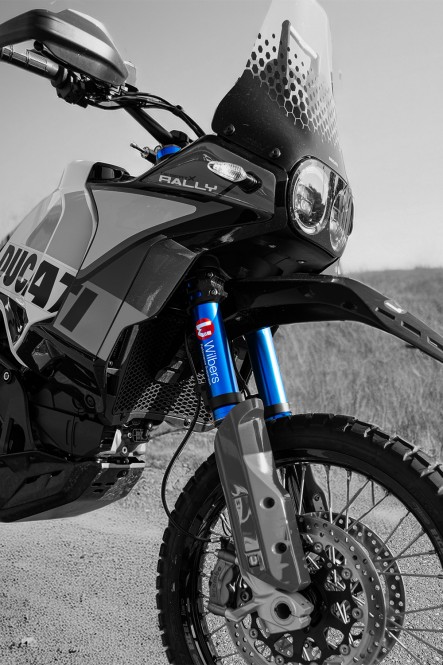
Fork anodised blue
Art. No.: 111-1111-11
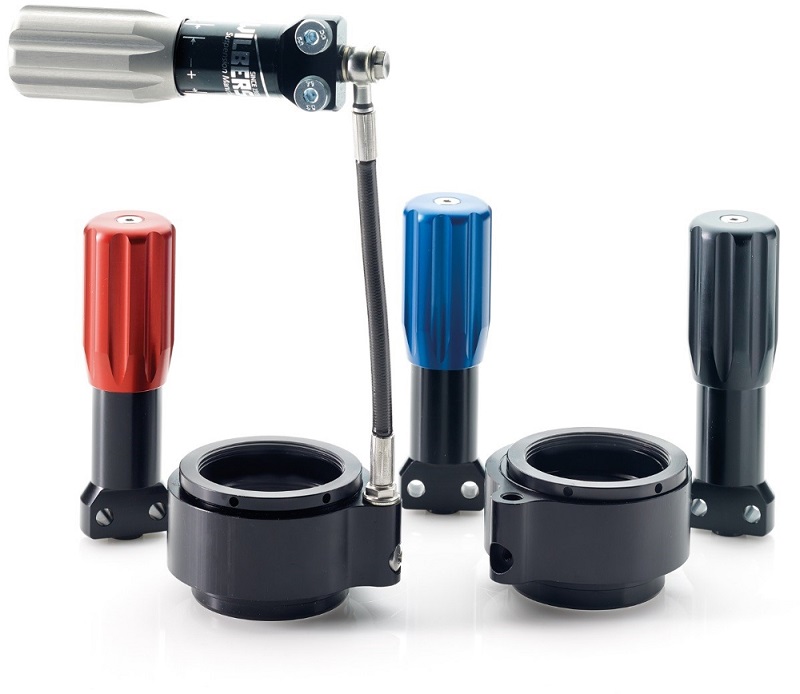
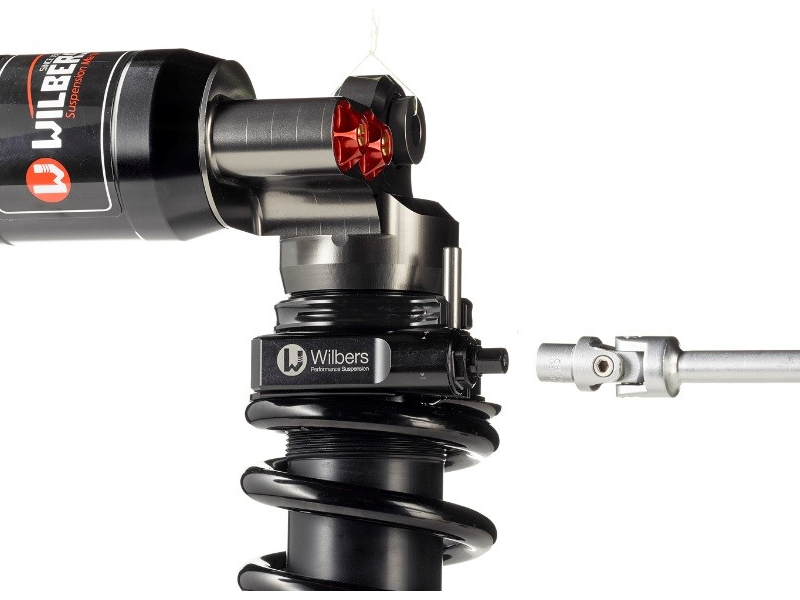
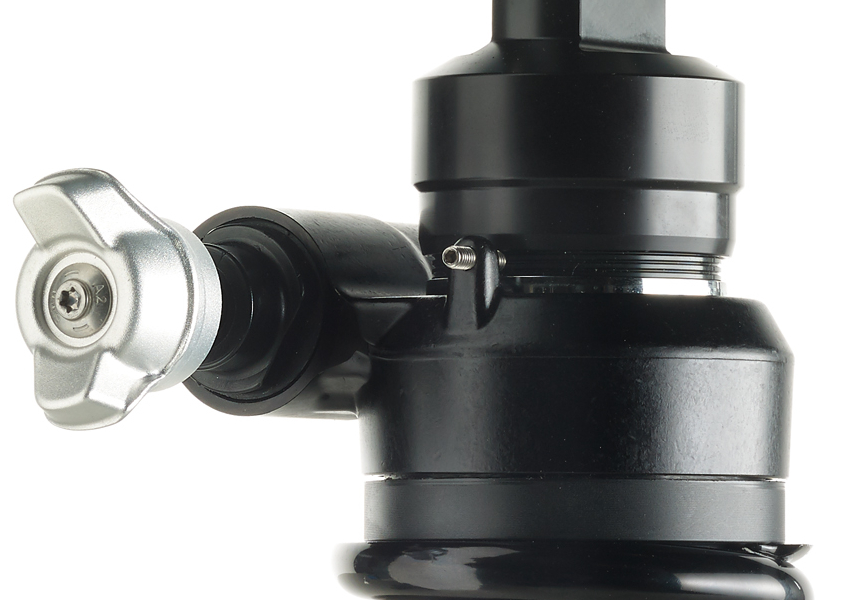
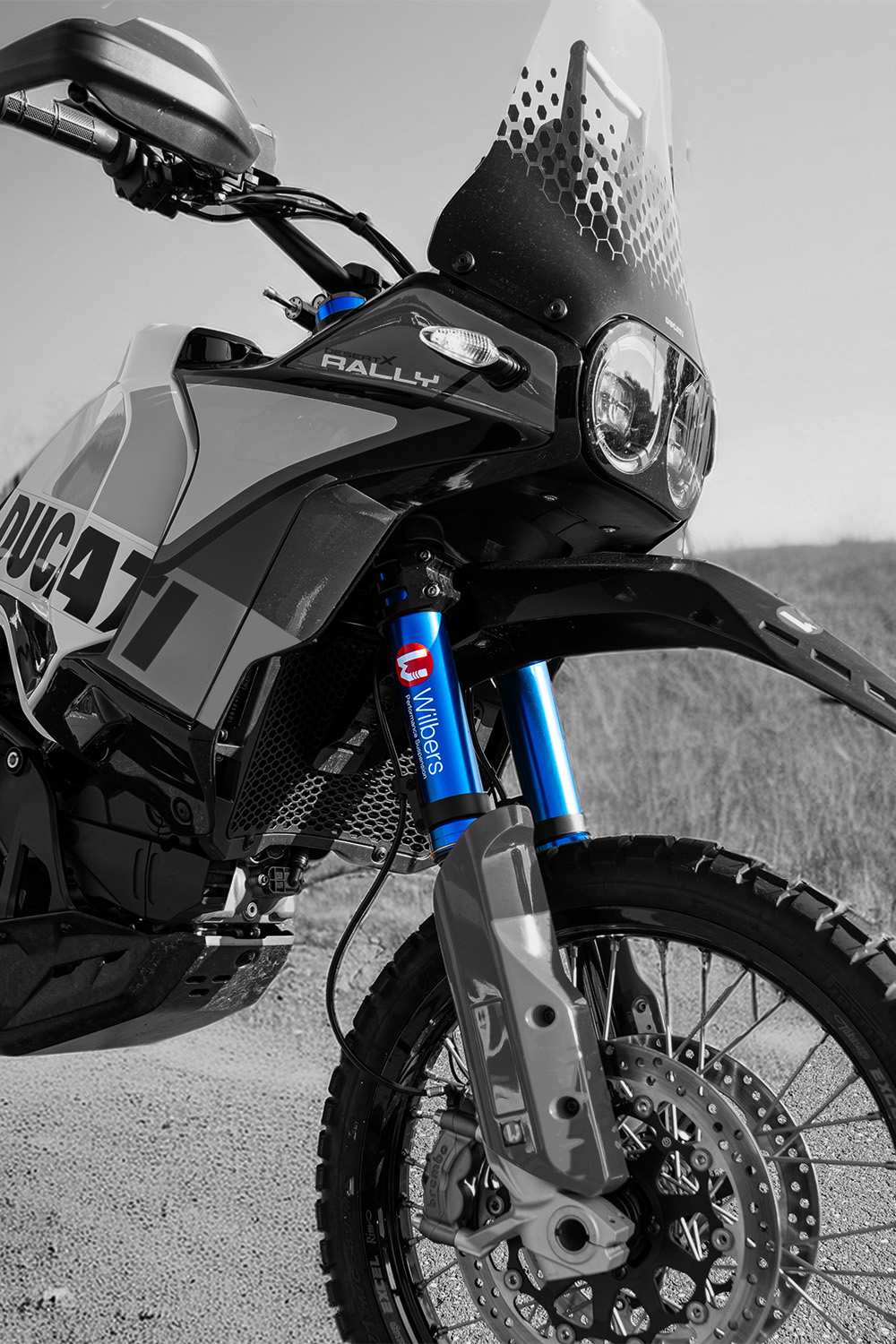
Especially for the Ducati Desert x Rally, we offer the option of having the outer tubes of the fork anodised blue.
The anodising process is a surface technology method for creating an oxidic protective layer on aluminium through anodic oxidation.
In contrast to galvanic coating processes, the protective layer is not deposited on the workpiece during anodising, but an oxide or hydroxide is formed by converting the top metal layer. The result is a 5 to 25 micrometre thin layer that protects deeper layers from corrosion. In contrast, the natural (atmospheric) oxide layer of aluminium is only a few nanometres thick.
In addition to the chemical resistance, anodising also increases the hardness of the surface and reduces the friction values on contact with various materials. Translated with DeepL.com (free version)
price per outer tube
The anodising process is a surface technology method for creating an oxidic protective layer on aluminium through anodic oxidation.
In contrast to galvanic coating processes, the protective layer is not deposited on the workpiece during anodising, but an oxide or hydroxide is formed by converting the top metal layer. The result is a 5 to 25 micrometre thin layer that protects deeper layers from corrosion. In contrast, the natural (atmospheric) oxide layer of aluminium is only a few nanometres thick.
In addition to the chemical resistance, anodising also increases the hardness of the surface and reduces the friction values on contact with various materials. Translated with DeepL.com (free version)
price per outer tube
99.00€ *

